Publications & Research
by Mashael Aldayel, Abeer Al-Nafjan, Reman Alwadiee, Sarah Altammami, Abeer Alnafaei, and Leena Alzahrani.
The rapid growth of digital tourism platforms has intensified information overload and decision complexity for both locals and travelers, while operators struggle to differentiate their offerings and sustain profitable, data-driven e-commerce models. This paper presents Doroob, a big data and artificial intelligence (AI)-driven, context-aware recommendation system that integrates traditional recommender techniques with real-time facial emotion recognition (FER) to enable intelligent tourism commerce. Doroob combines three AI-based recommendation strategies: smart adaptive recommendation (SAR) collaborative filtering, a Vowpal Wabbit-based context-aware model, and a LightFM hybrid model. It trained on datasets built from the Google Places API and enriched with ratings adapted from MovieLens. FER, implemented with DeepFace and OpenCV, analyzes short video segments as users browse destination details, converts emotion scores into 1–5 satisfaction ratings, and stores this implicit feedback alongside explicit ratings to support adaptive, emotion-aware personalization. Experimental results show that the context-aware model achieves the strongest top-K ranking performance, the hybrid LightFM model yields the highest AUC of 0.95, and the SAR model provides the most accurate rating predictions, demonstrating that combining contextual modeling and FER-based implicit feedback can enhance personalization, mitigate cold-start, and support data-driven promotion of local tourist services in intelligent e-commerce ecosystems.
Keywords: facial emotion recognition; hybrid recommendation system; collaborative filtering; context-aware.
Journal: IJERPH
Publication Year: 2024
DOI: View Paper
by Abeer Al-Nafjan and Mashael Aldayel.
Anxiety is a significant mental health concern that can be effectively monitored using physiological signals such as galvanic skin response (GSR). While the potential of machine learning (ML) algorithms to enhance the classification of anxiety based on GSR signals is promising, their effectiveness in this context remains largely underexplored. This study addresses this gap by investigating the performance of three commonly used ML algorithms, support vector machine (SVM), K-nearest neighbor (KNN), and random forest (RF), in classifying anxiety and stress activity using a benchmark dataset. We employed two feature extraction methods: traditional statistical feature extraction and an innovative automatic feature extraction approach utilizing a 14-layer autoencoder, aimed at improving classification performance. Our findings demonstrate the effectiveness of using GSR signals and the robust performance of the KNN algorithm in accurately classifying anxiety levels. The KNN algorithm achieved the highest accuracy in both the statistical and automatic feature extraction approaches, with results of 96.9% and 98.2%, respectively. These findings highlight the effectiveness of KNN for anxiety detection and emphasize the need for advanced feature extraction techniques to enhance classification outcomes in mental health monitoring.
Keywords: stress detection; anxiety; galvanic skin response; electrodermal activity.
Journal: Applied Sciences
Publication Year: 2024
DOI: View Paper
by Sarah Almuwayziri, Abeer Al-Nafjan, Hessah Aljumah, and Mashael Aldayel.
User authentication is crucial for safeguarding access to digital systems and services. Biometric authentication serves as a strong and user-friendly alternative to conventional security methods such as passwords and PINs, which are often susceptible to breaches. This study proposes a deep learning-based multimodal biometric system that combines fingerprint (FP) and finger vein (FV) modalities to improve accuracy and security. The system explores three fusion strategies: feature-level fusion (combining feature vectors from each modality), score-level fusion (integrating prediction scores from each modality), and a hybrid approach that leverages both feature and score information. The implementation involved five pretrained convolutional neural network (CNN) models: two unimodal (FP-only and FV-only) and three multimodal models corresponding to each fusion strategy. The models were assessed using the NUPT-FPV dataset, which consists of 33,600 images collected from 140 subjects with a dual-mode acquisition device in varied environmental conditions. The results indicate that the hybrid-level fusion with a dominant score weight (0.7 score, 0.3 feature) achieved the highest accuracy (99.79%) and the lowest equal error rate (EER = 0.0018), demonstrating superior robustness. Overall, the results demonstrate that integrating deep learning with multimodal fusion is highly effective for advancing scalable and accurate biometric authentication solutions suitable for real-world deployments.
Keywords: biometric authentication; fingerprint; finger vein; deep learning; convolutional neural network; multimodal fusion; feature-level fusion; score-level fusion; hybrid fusion; NUPT-FPV dataset.
Journal: Applied Sciences
Publication Year: 2025
DOI: View Paper
by Abeer Al-Nafjan, Lamia Alahaideb, Mashael Aldayel, and Hessah Aljumah.
This study investigates the use of electroencephalography (EEG) signals for user authentication as an innovative approach to enhancing security within the cybersecurity domain. Motivated by the limitations of traditional authentication mechanisms, we explore the viability of brainwave patterns as distinctive biometric markers for verifying user identity. This research utilizes a publicly available EEG authentication dataset comprising recordings from 38 participants, with data elicited through paradigms designed to evoke P300 and N400 event-related potentials (ERPs). A rigorous methodological framework was employed, including signal preprocessing, ERP and power spectral density (PSD) feature extraction, and a comparative evaluation of multiple machine learning and deep learning classifiers, such as support vector machines (SVMs), random forests (RFs), and convolutional neural networks (CNNs). The proposed CNN model demonstrated superior performance, achieving 99% accuracy in the N400-Faces task, highlighting its effectiveness in discerning complex neural signatures associated with semantic and facial stimuli. The findings of this study substantiate the feasibility of EEG-based biometrics as a secure, noninvasive authentication modality and contribute to the advancement of resilient authentication frameworks.
Keywords: electroencephalography (EEG); biometric authentication; event-related potentials (ERPs); convolutional neural network (CNN).
Journal: Sensors
Publication Year: 2025
DOI: View Paper
by Lamia Alahaideb, Abeer Al-Nafjan, Hessah Aljumah, and Mashael Aldayel.
Authentication is a critical component of digital security, and traditional methods often encounter significant vulnerabilities and limitations. This study addresses the emerging field of EEG-based authentication systems, highlighting their theoretical advancements and practical applicability. We conducted a systematic review of the existing literature, followed by an experimental evaluation to assess the feasibility, limitations, and scalability of these systems in real-world scenarios. Data were collected from nine subjects using various approaches. Our results indicate that the CNN model achieved the highest accuracy of 99%, while Random Forest (RF) and Gradient Boosting (GB) classifiers also demonstrated strong performance with 94% and 93%, respectively. In contrast, classifiers such as Support Vector Machine (SVM) and K-Nearest Neighbors (KNN) displayed significantly lower effectiveness, underscoring their limitations in capturing the complexities of EEG data. The findings suggest that EEG-based authentication systems have significant potential to enhance security measures, offering a promising alternative to traditional methods and paving the way for more robust and user-friendly authentication solutions.
Keywords: electroencephalography (EEG); brain–computer interface (BCI); authentication; event-related potentials (ERP); convolutional neural networks (CNN).
Journal: Sensors
Publication Year: 2025
DOI: View Paper
by Abeer Alnafjan, Maha Alghamdi, Noura Alhakbani, and Yousef Al-Ohali.
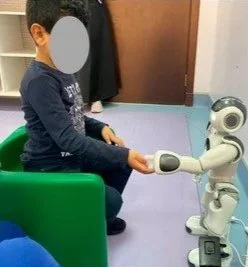
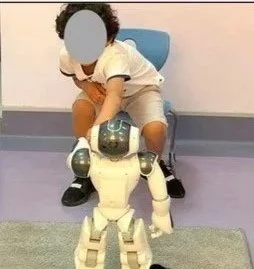
Autism spectrum disorder (ASD) is a group of developmental disorders characterized by poor social skills, low motivation in activities, and a lack of interaction with others. Traditional intervention approaches typically require support under the direct supervision of well-trained professionals. However, teaching and training programs for children with ASD can also be enhanced by assistive technologies, artificial intelligence, and robotics. Methods: In this study, we examined whether robotics can improve the imitation skills of children with autism and support therapists during therapeutic sessions. We designed scenarios for training hand clapping imitation skills using the NAO robot and analyzed the interaction between children with autism and the robot. Results: We developed a deep learning approach based on the human action recognition algorithm for analyzing clapping imitation. Conclusions: Our findings suggest that integrating robotics into therapeutic practices can effectively enhance the imitation skills of children with ASD, offering valuable support to therapists.
Keywords: robot; autism; therapy; human action recognition; imitation; convolutional neural network.
Journal: Diagnostics
Publication Year: 2025
DOI: View Paper
by Noura Alhakbani, Raghad Alnashwan, Abeer Al-Nafjan, and Abdulaziz Almudhi.
Disfluencies such as repetitions, prolongations, interjections, and blocks in sounds, syllables, or words can sometimes hinder communication. Currently, disfluencies are manually measured, which has inherent limitations, such as being time-consuming and subjective, which can lead to inconsistencies in measurement. Methods: To address these challenges, this study presents an innovative automated system for detecting disfluencies utilizing advanced artificial intelligence technologies; specifically, deep learning models such as convolutional neural networks (CNN) and convolutional long short-term memory (ConvLSTM). The system was evaluated using two benchmark datasets: FluencyBank and SEP-28K. Results: Our proposed system demonstrates remarkable performance, achieving detection accuracies of 0.97 and 0.96, respectively, for CNNs and ConvLSTM models. These results not only exceed those of prior studies but also highlight the effectiveness of our approach in enhancing stuttering evaluation. Conclusions: By providing a reliable and efficient tool for professionals in therapeutic settings, our system represents a significant advancement in the field, offering improved outcomes for individuals affected by stuttering.
Keywords: stuttering detection; deep learning; speech pathology; machine learning.
Journal: Journal of Clinical Medicine
Publication Year: 2025
DOI: View Paper
by Abeer Al-Nafjan, Amaal Aljuhani, Arwa Alshebel, Asma Alharbi, and Atheer Alshehri.
Today, Artificial intelligence (AI) and Machine Learning (ML) significantly enhance predictive analytics in the healthcare landscape, enabling timely and accurate predictions that lead to proactive interventions, personalized treatment plans, and ultimately improved patient care. As healthcare systems increasingly adopt data-driven approaches, the integration of AI and data analysis has garnered substantial interest, as reflected in the growing number of publications highlighting innovative applications of AI in clinical settings. This review synthesizes recent evidence on application areas, commonly used models, metrics, and challenges. Methods: We conducted a systematic literature review between using Web of Science and Google Scholar databases from 2021–2025 covering a diverse range of AI and ML techniques applied to disease prediction. Results: Twenty-two studies met criteria. The most frequently used machine learning approaches were tree-based ensemble models (e.g., Random Forest, XGBoost, LightGBM) for structured clinical data, and deep learning architectures (e.g., CNN, LSTM) for imaging and time-series tasks. Evaluation most commonly relied on AUROC, F1-score, accuracy, and sensitivity. key challenges remain regarding data privacy, integration with clinical workflows, model interpretability, and the necessity for high-quality representative datasets. Conclusions: Future research should focus on developing interpretable models that clinicians can understand and trust, implementing robust privacy-preserving techniques to safeguard patient data, and establishing standardized evaluation frameworks to effectively assess model performance.
Keywords: predictive healthcare; machine learning; deep learning; ICU; sepsis prediction; ensemble methods; federated fearning.
Journal: Journal of Clinical Medicine
Publication Year: 2025
DOI: View Paper
by Hadeel Alshehri, Abeer Al-Nafjan, and Mashael Aldayel.
Objective pain evaluation is crucial for determining appropriate treatment strategies in clinical settings. Studies have demonstrated the potential of using brain–computer interface (BCI) technology for pain classification and detection. Collating knowledge and insights from prior studies, this review explores the extensive work on pain detection based on electroencephalography (EEG) signals. It presents the findings, methodologies, and advancements reported in 20 peer-reviewed articles that utilize machine learning and deep learning (DL) approaches for EEG-based pain detection. We analyze various ML and DL techniques, support vector machines, random forests, k-nearest neighbors, and convolution neural network recurrent neural networks and transformers, and their effectiveness in decoding pain neural signals. The motivation for combining AI with BCI technology lies in the potential for significant advancements in the real-time responsiveness and adaptability of these systems. We reveal that DL techniques effectively analyze EEG signals and recognize pain-related patterns. Moreover, we discuss advancements and challenges associated with EEG-based pain detection, focusing on BCI applications in clinical settings and functional requirements for effective pain classification systems. By evaluating the current research landscape, we identify gaps and opportunities for future research to provide valuable insights for researchers and practitioners.
Keywords: brain–computer interface (BCI); pain assessment; electroencephalography (EEG).
Journal: Diagnostics
Publication Year: 2025
DOI: View Paper
by Lama Aldhafeeri, Fay Aljumah, Fajr Thabyan, Maram Alabbad, Sultanh AlShahrani, Fawzia Alanazi, and Abeer Al-Nafjan.
The rapid advancement of large language models (LLMs) has significantly transformed the development and deployment of generative AI chatbots across various domains. This systematic literature review (SLR) analyzes 39 primary studies published between 2020 and 2025 to explore how these models are utilized, the sectors in which they are deployed, and the broader trends shaping their use. The findings reveal that models such as GPT-3.5, GPT-4, and LLaMA variants have been widely adopted, with applications spanning education, healthcare, business services, and beyond. As adoption increases, research continues to emphasize the need for more adaptable, context-aware, and responsible chatbot systems. The insights from this review aim to guide the effective integration of LLM-based chatbots, highlighting best practices such as domain-specific fine-tuning, retrieval-augmented generation (RAG), and multi-modal interaction design. This review maps the current landscape of LLM-based chatbot development, explores the sectors and primary use cases in each domain, analyzes the types of generative AI models used in chatbot applications, and synthesizes the reported limitations and future directions to guide effective strategies for their design and deployment across domains.
Keywords: generative AI; large language models; LLMs; chatbot.
Journal: Applied Sciences
Publication Year: 2025
DOI: View Paper